

For decades, outsourcing meant one thing: sending work offshore, usually to Asia, to save money. But in 2025, that model is being challenged at its core. Near-shore customer support 2025, primarily in Latin America, is rapidly disrupting the U.S. BPO market by addressing challenges offshore destinations can no longer solve.
This disruption isn’t just about cost. It’s about time zone alignment, regulatory compliance, cultural affinity, specialized talent, and measurable ROI. C-Suite leaders are asking harder questions: Does this outsourcing partner protect us from compliance risk? Do they enhance customer experience? Can they scale without sacrificing quality? Nearshore providers are increasingly the only ones able to answer “yes” to all three.
The result? Nearshore outsourcing has moved from being a tactical cost option to becoming the strategic default for U.S. enterprises.
The Central Question: Why Is Nearshore Disrupting the U.S. BPO Market in 2025?
To answer this, we need to look at the intersection of three forces:
- The challenges facing the BPO industry in 2025 — costs, labor shortages, compliance risk, and rising expectations.
- The factors executives weigh when choosing a destination — from talent quality to political stability.
- The ability of nearshore models to solve these problems better than offshore models.
Simply put: nearshore is disruptive because it solves pain points that offshore cannot fix in 2025, while delivering higher-value outcomes aligned with U.S. business priorities.
U.S. BPO Market Pressures in 2025
The U.S. BPO market is still expanding, but growth is shadowed by mounting pressure:
- Escalating Costs – The labor cost advantage of offshore markets is shrinking. Wage inflation in India and the Philippines is eroding margins, while U.S. inflation raises expectations for vendor pricing.
- Talent Scarcity – Many offshore hubs face attrition rates exceeding 40% annually. This churn undermines service continuity and forces constant retraining.
- Customer Trust at Risk – Unanswered calls and slow resolutions cost healthcare providers alone an estimated $2–4 million annually in lost revenue.
- Compliance Complexity – Regulations such as HIPAA (healthcare), GDPR (data protection), and CCPA (privacy) have made compliance not optional but mission-critical. Non-compliance fines can range from $100,000 to $1.5 million per violation.
- CX as a C-Suite Metric – Gartner surveys show over 80% of CEOs rank customer experience among their top three strategic priorities.
- Global Uncertainty – Geopolitical tension, climate events, and policy shifts introduce risks into offshore-reliant supply chains.
The conclusion is clear: the traditional offshore model is under strain.
From Cost-Cutting to Value Creation
Twenty years ago, outsourcing was almost exclusively about “cheap labor.” But executives in 2025 know the boardroom question has changed:
- Yesterday’s question: How much money will outsourcing save?
- Today’s question: How will outsourcing improve ROI, reduce risk, and strengthen CX?
This explains why U.S. BPO market trends 2025 highlight a pivot toward value-driven outsourcing. Leaders want:
- Performance metrics like first-call resolution and NPS.
- Innovation adoption, especially AI and automation.
- Compliance guarantees to reduce regulatory exposure.
- Scalable models that don’t collapse under labor shortages.
Nearshore providers in Latin America are emerging as the only ones that can consistently meet these needs.
Factors Impacting BPO Destination Decisions in 2025
C-Suite executives evaluating outsourcing destinations weigh a complex mix of strategic and operational factors. Let’s expand on each:
1. Labor Costs vs. Total ROI
- Offshore vendors often present lower hourly rates. But the hidden costs—attrition, errors, cultural misalignment—drive up the total cost of ownership.
- Nearshore offers a middle ground: not the cheapest per hour, but often the best value per resolved customer interaction.
2. Talent Quality and Specialization
- Healthcare requires HIPAA-trained agents. Fintech requires fraud specialists. SaaS requires tech support talent. Offshore talent often lacks this specialization.
- Latin America is producing a growing pool of bilingual, industry-trained professionals, reducing ramp-up times.
3. Infrastructure and Digital Readiness
- Offshore markets sometimes suffer from unreliable internet and weak cloud security frameworks.
- Nearshore hubs are investing heavily in fiber connectivity, cloud services, and cybersecurity certifications to meet U.S. enterprise standards.
4. Political and Economic Stability
- Countries with volatile governments or restrictive outsourcing laws create uncertainty.
- Many nearshore markets, such as Colombia, Mexico, and the Dominican Republic, benefit from U.S. trade agreements and alignment with Western regulatory frameworks.
5. Time Zone Aligned Customer Support
- This is one of the most disruptive advantages. Real-time collaboration allows managers to monitor calls, conduct training, and resolve escalations without delay.
- Offshore teams often operate asynchronously, creating bottlenecks.
6. Regulatory Compliance and Data Privacy
- A single data breach can destroy customer trust and brand reputation. Offshore compliance frameworks are inconsistent.
- Nearshore providers increasingly invest in SOC 2, ISO 27001, HIPAA compliance, and localized data protection policies.
7. Cultural and Linguistic Fit
- Customer-facing teams succeed when communication feels natural. Offshore accents and cultural disconnects can frustrate U.S. customers.
- Nearshore agents share cultural affinity, leading to 15–20% higher CSAT scores compared to offshore counterparts.
Taken together, these factors explain why nearshore is disruptive in 2025: it delivers on all the criteria executives value most—something offshore destinations can no longer guarantee.
Industries Thriving in 2025 With Nearshore BPO
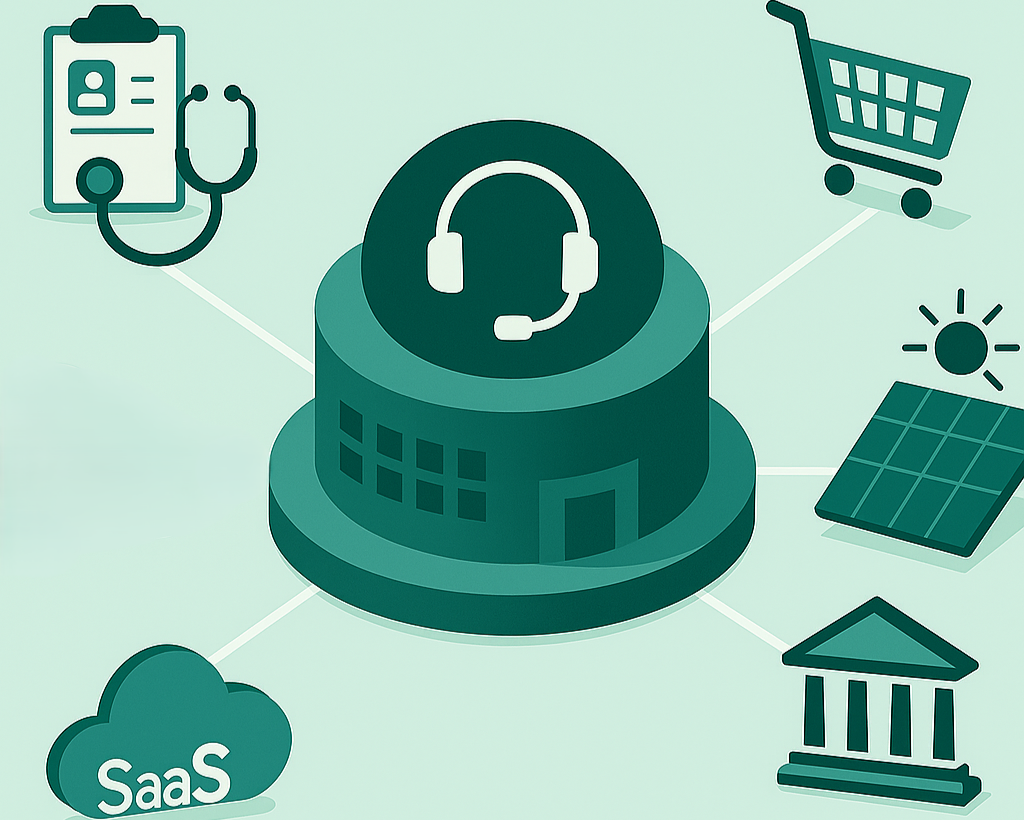
Nearshore disruption is most evident in industries where compliance, trust, and customer intimacy matter:
- Healthcare – Patient engagement, medical billing, and telehealth support are growing fast, and these compliance-critical functions are better served by nearshore teams familiar with U.S. healthcare systems. Nearshore BPOs ensure secure data handling, faster billing resolution, and more empathetic patient communication—while proximity and cultural affinity strengthen telehealth delivery.
- Technology & SaaS – Nearshore tech support and customer success teams help U.S. SaaS companies reduce churn and accelerate adoption.
- E-commerce & Retail – Seasonal demand spikes are met more efficiently with scalable nearshore staffing.
- Financial Services – Nearshore agents trained in fraud detection and regulatory compliance reduce risk for banks and fintech firms.
- Renewables and Sustainability – As ESG becomes a board-level priority, nearshore BPO partners supply analytical and reporting support with lower environmental footprints than long-haul offshore operations.
Challenges and Emerging Solutions in Outsourcing
Key Challenges
- Hidden Financial Risks – Vendor lock-in, unclear SLAs, and unplanned training costs erode ROI.
- Data Breaches – Cyber threats are increasing in scale, from phishing to ransomware.
- Attrition and Burnout – Offshore centers suffer turnover rates above 30%, driving service instability.
- Lagging Digital Adoption – Some providers cannot integrate AI, automation, or omnichannel support effectively.
- Quality Gaps – Customer experience is compromised when oversight is limited by time zones or cultural barriers.
Emerging Solutions Reshaping Customer Support
The disruptions we’re seeing are not only geographic—they are technological and operational. Nearshore partners are adopting solutions that directly respond to U.S. business needs:
- AI + Human Collaboration – Automation handles FAQs, appointment scheduling, and simple billing queries, while trained human agents manage escalations, complex cases, and empathy-driven interactions. This model reduces costs without sacrificing customer experience.
- Omnichannel integration – Customers expect fluid transitions between phone, email, chat, and social platforms. Nearshore providers integrate these touchpoints to eliminate silos, improving both efficiency and customer loyalty.
- Compliance-by-design – Leading nearshore BPOs are embedding compliance frameworks (HIPAA, PCI DSS, GDPR, CCPA) into their processes from the start, reducing risks for clients in regulated industries.
- Analytics-driven performance – Nearshore providers leverage advanced reporting and predictive analytics to optimize staffing, reduce call abandonment, and provide executives with transparent ROI data.
- Telehealth and digital services – In healthcare, nearshore BPOs are extending their scope to include telehealth scheduling, patient portal support, and claims resolution—services that demand both compliance and cultural proximity.
By addressing both technical and human dimensions of customer support, nearshore providers are stepping into a leadership role that offshore-only models cannot sustain.

Future of the BPO Industry Beyond 2025
Looking ahead, the BPO industry will continue its rapid growth, but the winners will be those aligned with nearshore strengths:
- AI + Human Synergy – The model of the future blends automation with empathy. Nearshore providers, with stronger communication skills, excel in this hybrid model.
- Omnichannel as the Standard – Nearshore centers are leading the charge in seamless customer experiences across phone, email, chat, and social.
- Industry Specialization – The generalist model is fading. Nearshore providers increasingly focus on vertical expertise: healthcare, fintech, SaaS, retail.
- Compliance as Core Service – Providers will act as compliance guarantors, not just labor pools.
- Sustainability and Impact Sourcing – Boards demand ESG accountability. Nearshore operations reduce carbon footprints and create social impact in local economies.
Why Nearshore Is the Disruptive Force in 2025
Nearshore support is not simply “cheaper outsourcing closer to home.” It is disruptive because it reshapes the strategic value proposition of BPO.
- ROI Advantage – Offshore may save on hourly wages, but nearshore saves millions in avoided compliance fines, improved customer retention, and reduced attrition.
- Customer Trust – U.S. consumers notice the difference in empathy, language, and real-time support. Trust translates into loyalty and revenue.
- Agility and Scalability – Nearshore partners ramp teams up or down faster, with attrition rates significantly lower than offshore hubs.
- Risk Reduction – Political alignment, regulatory compliance, and time zone proximity reduce operational risk.
- Innovation Alignment – Nearshore teams integrate AI, RPA, and omnichannel faster due to closer cultural and technical compatibility.
In essence, nearshore disrupts because it shifts outsourcing from a defensive cost strategy to an offensive growth enabler.
Conclusion
So, Why is near-shore customer support disrupting the U.S. BPO market in 2025?Because it resolves the pain points offshore outsourcing can no longer address. It provides:
- Compliance strength where regulatory fines loom large.
- Customer experience improvements that drive loyalty and revenue.
- Cultural and time zone alignment that accelerates problem-solving.
- Scalable, specialized talent that meets the needs of high-growth industries.
- Higher ROI not through cheaper rates, but through measurable business outcomes.
The disruption is not just about geography—it’s about reshaping what outsourcing means for U.S. companies. Nearshore is proving that outsourcing can be:
- Strategic, not tactical
- Growth-oriented, not cost-obsessed
- Customer-centric, not transactional
For decision-makers, the implications are urgent. Nearshore is no longer an “alternative”—it is the competitive standard. Companies that adapt will build resilience, compliance strength, and superior customer experiences. Companies that hesitate risk being left with outdated offshore models that no longer deliver.
The U.S. BPO market is being redefined in 2025, and nearshore customer support is at the center of this transformation. The question is no longer if disruption will happen—it already has. The real question for executives is: how quickly can your organization pivot to capture nearshore’s advantages?
Published on August 28, 2025
Written by Camilo Sánchez